By:
Larry F. Waldman, Ph.D., ABPP
In mid-May I completed a two-year yoga certification program at age 77. I was super fit.
Also around that time, I began to experience problems with my prostate—urinary frequency and leakage—as is common in senior men. I saw a urologist who prescribed medication and ordered some testing. In June the urologist reviewed the testing and indicated that I needed a procedure done on my prostate. He set a surgery date for December 15! I responded, “Isn’t that rather far off!?” He answered, “That’s what the schedule allows.” (The “dreaded” schedule.)
My symptoms continued to worsen, requiring that I wear a pad during the day and a diaper at night. In September I developed some other troubling issues: serious fatigue, always cold, and a foreign taste in my mouth, which interfered with eating. I went to the ER where they discovered my kidney functioning was down to 18%. (Dialysis is needed at 10%.) It was concluded that my enlarged prostate was not allowing my bladder to empty and the excess urine in my bladder was “back-flushing” into my kidneys, essentially poisoning them, and causing those above-noted problems. I spent four days in the hospital and was discharged–with a catheter. I asked if I could have the prostate surgery while in the hospital, but my request was denied because it was “no longer an emergency.” Apparently, nearly losing the benefit of my kidneys does not qualify as emergent.
For those who are unfamiliar, a catheter is a plastic bag that one wears all day and night. A tube is placed into the penis (a terrible sensation!) which connects to the bladder. Urine then runs through that tube into the bag, which must be emptied regularly. The process is cumbersome, messy, painful, sometimes bloody and occasionally embarrassing, when it leaks. The catheter prevents me from conducting yoga classes, exercising vigorously and being intimate with my wife.
Since September I have been to the ER five times, as the catheter clogs for one reason or another. When this occurs, the bladder becomes distended and if the catheter isn’t cleared quickly, the pain is the worst I have ever experienced. Again, every time I was in the ER I asked if I could undergo the prostate procedure, since I’m already in the hospital, but the answer was always negative. I’ve managed to secure a surgery date in about two weeks, though.
The amount of pain, suffering and inconvenience I’ve endured since June is immeasurable. This is not good health care. The time and expense incurred unnecessarily since June surely cost much more than the procedure. I understand I’m not the only person who has had their treatment delayed. For some, the delay could result in irreparable harm or even death.
When I was in practice as a clinical, forensic psychologist I strived to meet my patients’ needs. If a patient called in crisis, I saw them at 7am, lunch time, 8pm or contacted a psychiatrist colleague to see them and provide needed medication. If an attorney or judge called saying they needed my forensic report earlier, I worked all night, if need be, to get it done. This doesn’t happen much today in health care. Providers stick to the “dreaded” schedule.
Recently, I was chatting with a gent from Canada about health care. He laughed and said, “We, Canadians, at least, voted for it; you Americans have had it shoved down your throats.”
Why is this happening?
1. There is a serious shortage of physicians. The word is out. Becoming a doctor is not the great prize it used to be: Medical school, residency, internship, and specialization can take upwards of 12 years of education, or more, and leave a debt approaching several hundred thousand dollars. A physician typically doesn’t begin to earn income until they are in their mid-30’s. Also, doctors are not paid nearly as well as before. Most physicians must see many more patients per day than ten years ago to make a living. Parents are advising their kids to get a JD or MBA degree and not an MD. A busy plumber or electrician today—with a two-year Associate Arts degree– can earn as much as a primary care physician.
2. There is a different attitude among physicians today: The debt, low reimbursement, having to see more patients, the liability, and the fact that the general population doesn’t revere doctors like we used to, has negatively affected many providers. The doc who goes out of his/her way to help a patient today, or even calls the patient directly, unfortunately is rare—so they keep to the schedule.
3. Finally, physicians and hospitals provide services at a significant discount, as insurance companies provide limited reimbursement—sometimes paying less than 25% of what was billed. Interestingly, insurance premiums have never gone down and continue to rise. (This was one of the major reasons Canada went with their program.)
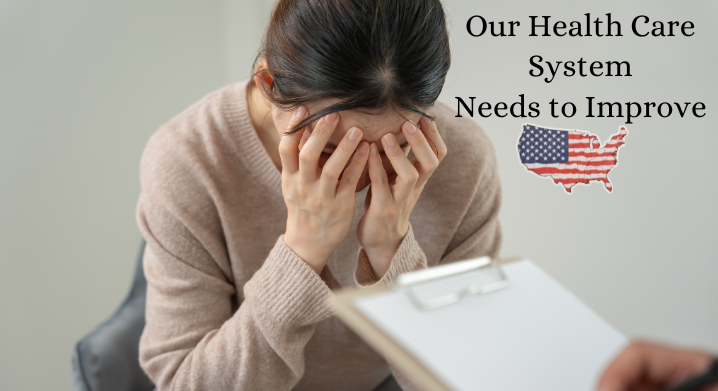
Our health care system needs to improve. Health insurance was initially designed to pay for care, not direct it. As a previous health care provider, I always felt that working with insurance companies was like the proverbial tail wagging the dog.
In a few weeks I will be back to conducting yoga classes for seniors, working out regularly and sharing intimacy with my wife. However, unfortunately, more people will continue to suffer as they wait to receive the treatment they direly need.







Social Contact