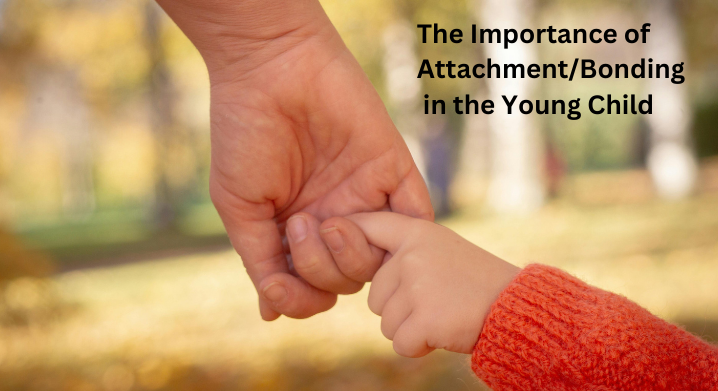
When we bring a new-born neonate home from the hospital the thrilled but exhausted parents are primarily concerned with the basic care and feeding of the infant. While this concern is obviously important, some attention must be paid to the child’s emotional development. At this early stage in the child’s life psychological health comes primarily by way of attachment, or bonding.
The infant is born naked and naïve. They don’t know what is right/wrong or good/bad. They just want their needs met. It is amazing how an infant, barely a few weeks old, completely non-verbal, can so effectively train their parents to come to their specific aid. To survive on the savannah in Africa a baby antelope must run with the herd within 30 minutes of birth. While the average human child can’t run for about 18 months after birth, the child has the cognitive capacity to manipulate their parents to completely manage their needs, despite the child’s immobility.
By the time most infants are six weeks old they recognize their primary caregiver(s)—usually the mother, and/or an involved father, and/or a nanny. They relate to the mother’s (caregiver’s) face, voice, and, some say, their smell. It has been argued that babies, in utero, become familiar with their mother’s voice.
The hour by hour, day by day, feeding, diapering, and bathing the baby initiates the bonding process. Keeping the baby fed, clothed, and clean are certainly important but are not enough. What is crucial to the attachment process is stimulation—speaking to the child, singing, smiling, touching/stroking, reading, and introducing interesting visual, auditory, and tactile experiences. This attachment process is well on its way by month three.
Bonding is critically important to the emotional development of the child because it teaches them to trust, to have faith in other humans, to feel important and worthy, and, ultimately, to love. Children whom fail to bond with a primary caregiver, and thus develop an “attachment disorder,” are likely to become isolative adults with personality issues. It is commonly believed that sociopathic and psychopathic individuals came from dysfunctional homes and did not connect with a caregiver.
Post-partum depression, clinical depression or other mental health issues, drugs, homelessness, poverty, chaos in the home, developmental delay, and lack of education are all possible reasons why an attachment disorder in a child may occur. If a parent is concerned regarding their child’s attachment—for example, the child appears apathetic or disinterested or does not seem to care if they are held or not—the parent should contact their pediatrician immediately. By examining the child and guiding the parent/caregiver the attachment process, if caught early, can be rehabilitated. Most children are solidly attached to their primary caregiver(s) by one year of age.











Social Contact